Blackjack strategy at Aphrodite Casino: Basic strategy charts for European blackjack & live tables
Blackjack is the one casino game where what you do genuinely matters. Slots are pure chance, roulette is a spinning wheel of probabilities, but blackjack hands you decisions that directly change the house edge on every single round. Play your cards poorly and the casino holds an advantage of 2% or more over you. Play them correctly — following what mathematicians have calculated over decades of computer analysis — and that edge shrinks to roughly 0.5%, making blackjack one of the fairest games on the entire Aphrodite Casino floor. The gap between a guessing player and a strategy player is not subtle: over a hundred hands, it is the difference between losing $20 and losing $200. This guide covers the specific rules of European blackjack as offered at Aphrodite Casino, the complete basic strategy chart for those rules, and the adjustments you need when moving from the digital felt to the live dealer studio.
European blackjack rules at Aphrodite Casino
Before strategy comes rules, and blackjack rules are not universal. Aphrodite Casino offers European blackjack — also known as European no-hole-card blackjack — which differs in one critical way from the American variant most players encounter in films and on TV. In European blackjack, the dealer receives only one face-up card at the start of the round. The second card — the hole card — is not dealt until all players have completed their actions. This means you make your hitting and standing decisions without knowing whether the dealer will ultimately bust or make a strong hand.
The practical consequence of this rule is that you cannot lose your full bet to a dealer blackjack before you have had a chance to act. If the dealer's single exposed card is an ace or a ten-value card, the dealer checks for blackjack after all players have played their hands. If the dealer has blackjack, you lose your original wager but any splits, doubles, or additional bets you placed during the round are returned — though at Aphrodite Casino, the exact treatment of doubles and splits in this scenario may vary by table, so always check the specific table rules displayed on the felt.
The core ruleset at Aphrodite Casino's European blackjack tables typically includes the following:
- Number of decks — six decks are standard, though some tables may use four or eight.
- Dealer stands on soft 17 — a dealer holding an ace and a six (a soft 17 totaling 7 or 17) will stand rather than hit, which is favourable for the player.
- Blackjack pays 3:2 — a natural ace-ten pays 1.5x your bet. Avoid any table that pays 6:5, as this single change inflates the house edge by roughly 1.4%.
- Double down on 9, 10, or 11 — some European blackjack variants restrict doubling to these hard totals only, which is tighter than American rules that allow doubling on any two cards.
- Split pairs once — you can split a pair into two separate hands, but re-splitting is typically not permitted. Split aces receive one card per ace and cannot be re-split.
- No surrender — European blackjack rarely offers the surrender option, so this defensive play is not available at Aphrodite Casino's European tables.
- Insurance offered when dealer shows an ace — insurance is a side bet that the dealer has blackjack, paying 2:1. Basic strategy says to decline it.
These rules combine to produce a house edge of approximately 0.55–0.6% when you follow basic strategy perfectly. That figure assumes optimal play on every hand — no guessing, no hunches, no deviations based on "feeling lucky." The strategy chart in the next section tells you exactly what to do in every possible situation this ruleset creates.
The complete basic strategy chart for European blackjack
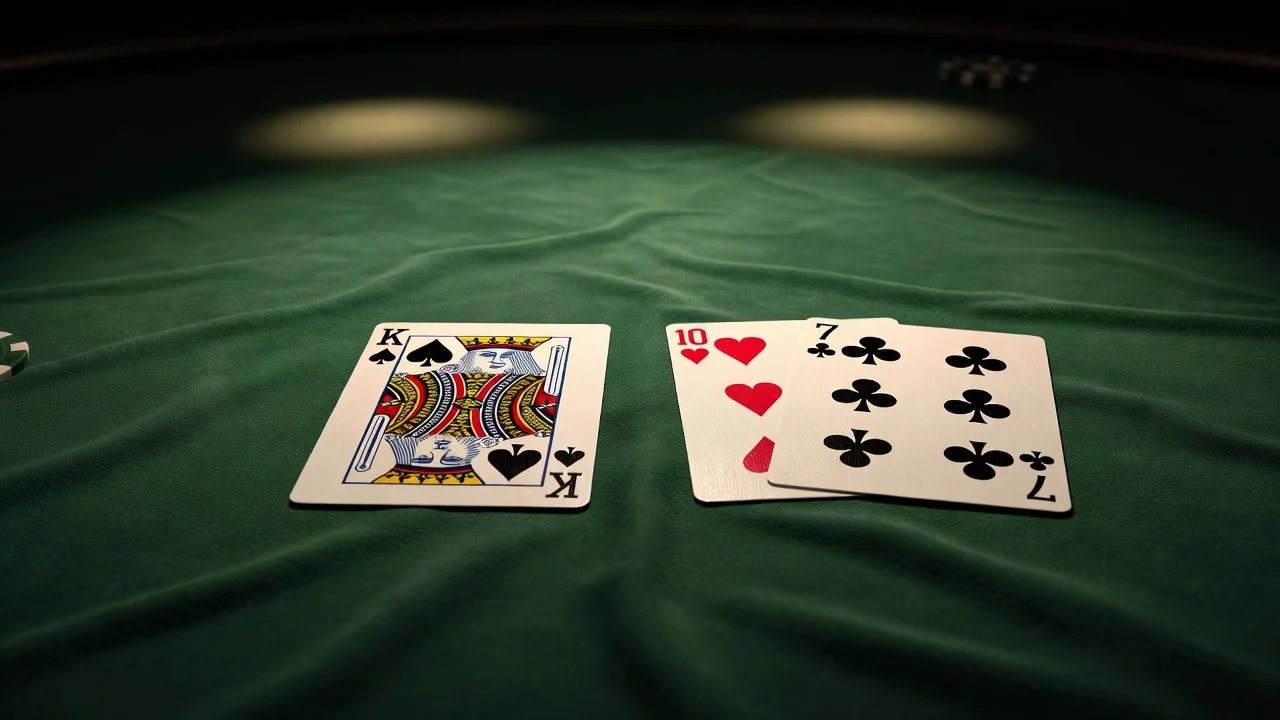
Basic strategy is not a theory or a guideline — it is a mathematically proven set of decisions developed by running billions of simulated hands through computers. Every cell in the chart below tells you the action that produces the highest expected return for that specific combination of your hand and the dealer's upcard. The chart is organised by hand type: hard totals (hands without an ace, or hands where the ace must count as one), soft totals (hands containing an ace that can count as eleven without busting), and pairs (identical cards that can be split).
Reading the chart is straightforward. Find your hand total along the left side, find the dealer's upcard along the top, and the intersection tells you what to do. The abbreviations are: H for hit, S for stand, D for double down (if not allowed, hit instead), and SP for split.
| Your hand | Dealer 2 | Dealer 3 | Dealer 4 | Dealer 5 | Dealer 6 | Dealer 7 | Dealer 8 | Dealer 9 | Dealer 10 | Dealer A |
|---|---|---|---|---|---|---|---|---|---|---|
| 5–8 | H | H | H | H | H | H | H | H | H | H |
| 9 | H | D | D | D | D | H | H | H | H | H |
| 10 | D | D | D | D | D | D | D | D | H | H |
| 11 | D | D | D | D | D | D | D | D | D | H |
| 12 | H | H | S | S | S | H | H | H | H | H |
| 13 | S | S | S | S | S | H | H | H | H | H |
| 14 | S | S | S | S | S | H | H | H | H | H |
| 15 | S | S | S | S | S | H | H | H | H | H |
| 16 | S | S | S | S | S | H | H | H | H | H |
| 17+ | S | S | S | S | S | S | S | S | S | S |
| A,2–A,3 | H | H | H | D | D | H | H | H | H | H |
| A,4–A,5 | H | H | D | D | D | H | H | H | H | H |
| A,6 | H | D | D | D | D | H | H | H | H | H |
| A,7 | S | D | D | D | D | S | S | H | H | H |
| A,8–A,9 | S | S | S | S | S | S | S | S | S | S |
| 2,2 | SP | SP | SP | SP | SP | SP | H | H | H | H |
| 3,3 | H | H | SP | SP | SP | SP | H | H | H | H |
| 4,4 | H | H | H | H | H | H | H | H | H | H |
| 5,5 | D | D | D | D | D | D | D | D | H | H |
| 6,6 | SP | SP | SP | SP | SP | H | H | H | H | H |
| 7,7 | SP | SP | SP | SP | SP | SP | H | H | H | H |
| 8,8 | SP | SP | SP | SP | SP | SP | SP | SP | SP | SP |
| 9,9 | SP | SP | SP | SP | SP | S | SP | SP | S | S |
| 10,10 | S | S | S | S | S | S | S | S | S | S |
| A,A | SP | SP | SP | SP | SP | SP | SP | SP | SP | SP |
The chart looks dense, but after a few sessions it becomes second nature. Most hands fall into intuitive patterns: stand on 17 or higher, hit on 11 or lower, double on 10 and 11 against weak dealer cards. The trickier spots are the soft hands — an ace-six (soft 17) feels like it should be a stand, but the chart says to double against dealer 3–6 because the ace protects you from busting and the dealer is vulnerable. Similarly, splitting 8s against a dealer 10 feels wrong because you are turning one losing hand into two, but the maths proves that two hands starting with 8 each lose less on average than one hand starting with 16. Trust the chart, not your instincts — your instincts were shaped by incomplete information and fear of busting, while the chart was shaped by billions of simulated outcomes.
How live dealer blackjack changes the game
Playing European blackjack at Aphrodite Casino's digital tables is a solo experience. The cards are dealt by an RNG, the pace is as fast as you want it to be, and you can consult a strategy chart between hands without anyone watching. Live dealer blackjack is a different animal. A real dealer sits at a physical table in a studio, cards are dealt from a real shoe, and the action streams to your screen in real time. The decisions you make are the same, but the environment introduces new variables that affect both strategy and psychology.
The first major difference is pace. Live dealer games at Aphrodite Casino run on a schedule — the dealer deals, players have a fixed window (usually fifteen to twenty seconds) to act, and then the next round begins. There is no pausing to consult a chart, no taking a breath after a bad beat. If you are not fluent in basic strategy, the timer will pressure you into mistakes. This is why it is essential to memorise the chart — or at least the most common decisions — before sitting at a live table.
Second, live blackjack introduces a social element. Other players may occupy seats at the same table, and their decisions can create the illusion that your outcomes are affected by what they do. A player who hits on 16 against a dealer 6 and "takes the dealer's bust card" is a classic source of friction at live tables. In reality, the order of cards is random, and no other player's decision changes your expected value over the long run. The card they took was equally likely to be a bust card or a ten — you simply notice it more when the outcome is bad. Aphrodite Casino's live blackjack tables display each player's decisions openly, but your strategy should never adapt to what other players are doing. Play your hand based on your cards and the dealer's upcard — nothing else.
Bankroll considerations specific to blackjack
Blackjack has a lower house edge than virtually any other game at Aphrodite Casino, but that edge is realised over thousands of hands, not dozens. In any given session, variance can swing your balance significantly in either direction. A streak of dealer blackjacks or a run of stiff hands (12–16) against strong dealer upcards can drain your balance faster than you expect, even when you are playing perfectly.
The standard guideline for blackjack bankroll management is to bring at least 50 betting units to a session. If you are betting $5 per hand, that means a $250 session bankroll. This gives you enough cushion to weather a typical downswing without going broke before the variance evens out. With 50 units, the probability of busting out in a 100-hand session — even against a 0.5% house edge — is quite low, provided you do not increase your bets during losing stretches.
Live dealer sessions tend to involve fewer hands per hour — typically 50–70 compared to 200+ at a fast digital table — which means your bankroll stretches further in terms of time but exposes you to fewer decision points. Some players prefer this slower pace because it reduces the total amount wagered per session, while others find it tedious. Either way, the bankroll math is the same: size your session bankroll to your bet, set a loss limit, and resist the urge to increase your bet after a losing streak.
Common mistakes that destroy your edge
Even players who know basic strategy can leak money through errors that have nothing to do with the chart. These mistakes are behavioural rather than mathematical, and they tend to appear under specific emotional conditions — after a losing streak, after a big win, or when playing at stakes above your comfort zone.
The following errors consistently erode the advantage that basic strategy provides, and recognising them in your own play is the first step toward eliminating them:
- Deviating from the chart on instinct — the most common mistake. You know the chart says to hit 16 against a dealer 10, but you stand because "the dealer is going to bust." Over millions of hands, hitting produces a better expected return, even though it feels wrong in the moment.
- Taking insurance — insurance is a side bet that pays 2:1 if the dealer has blackjack. It sounds like protection, but the true odds of the dealer having blackjack when showing an ace are roughly 7:5 against, making insurance a losing bet in the long run unless you are counting cards and know the deck is rich in tens.
- Increasing bets after losses — the martingale approach (doubling after each loss) is mathematically bankrupt in a game with a house edge. It works until it does not, and the moment it fails, you lose your entire bankroll in a sequence that was supposed to be recovering small losses.
- Playing 6:5 blackjack tables — if Aphrodite Casino ever offers a table that pays 6:5 instead of 3:2 on naturals, avoid it entirely. A $10 bet that wins $15 at a 3:2 table wins only $12 at a 6:5 table. This one rule change is worth roughly 1.4% to the house — more than triple the basic strategy edge you worked to achieve.
- Splitting tens — a pair of tens is a hard 20, which wins against most dealer upcards. Splitting them turns one strong hand into two weaker ones, increasing the house edge by 0.5% on that hand alone. The only scenario where splitting tens is correct is if you are counting cards and the true count is extremely high — a situation that almost never applies in online play.
- Ignoring table rules — European blackjack at Aphrodite Casino has specific rules about when you can double, split, and whether the dealer hits or stands on soft 17. A strategy chart designed for different rules will produce slightly wrong decisions in certain spots. Always verify the table rules before applying the chart.
Each of these mistakes is preventable, and the cumulative cost of making several of them in a single session can be staggering. A player who follows basic strategy but takes insurance, splits tens, and plays a 6:5 table has effectively doubled the house edge — turning a 0.5% game into a 1% game or worse. The discipline to avoid these traps is just as important as the knowledge of the chart itself.
Card counting and why it does not work online
No discussion of blackjack strategy is complete without addressing card counting, the technique dramatised in films like 21 and books like Bringing Down the House. Card counting works by tracking the ratio of high cards to low cards remaining in the shoe. When the deck is rich in tens and aces, the player has an advantage and should bet more. When it is rich in low cards, the player should bet less. In theory, this flips the house edge in the player's favour.
In practice, card counting is essentially impossible at Aphrodite Casino's online and live dealer blackjack tables for a combination of technical and practical reasons that make the technique unworkable in a digital environment.
The key obstacles to card counting at Aphrodite Casino include:
- Shoe penetration — card counting requires the dealer to deal deep into the shoe before reshuffling, typically 65–75% penetration. Online and live dealer platforms frequently reshuffle at 50% or less, giving the counter insufficient data to develop a meaningful count.
- Continuous shuffling machines — some live dealer studios use automatic shufflers that reintroduce discards after each round, making counting impossible because the composition of the shoe never changes between hands.
- Round speed — live dealer blackjack deals fewer hands per hour than a physical casino, which means fewer opportunities per hour to exploit a favourable count even if one could be established.
- Bet variation detection — even if you could count successfully, live dealer platforms monitor betting patterns. Wild bet swings that correlate with a count would be flagged and could result in reduced table limits or account restrictions.
- Multi-deck shoes — six or eight decks dilute the effect of each card removed, requiring a much higher true count before the player edge becomes meaningful. The deeper into the shoe you go, the more pronounced this dilution becomes.
Rather than chasing an advantage technique that the online environment neutralises, your time is better spent memorising the basic strategy chart until it is automatic and managing your bankroll so that the low house edge works in your favour over long sessions. Basic strategy is not glamorous, but it is reliable, it is legal, and it shrinks the casino's advantage to a level that few other games at Aphrodite Casino can match.
From theory to practice: Your next session
Knowing the chart and executing it under pressure are two different skills. The transition from theory to practice happens fastest when you build it in stages rather than jumping straight into a live dealer session with real money on the line.
Start at Aphrodite Casino's digital European blackjack table at https://lesperluette-food-truck.fr/, where you control the pace. Play fifty to a hundred hands at the minimum bet, consulting the chart openly on every decision. Your goal is not to win — it is to execute the correct play every time without hesitation. Track your accuracy: after each hand, note whether your decision matched the chart. Aim for 100% compliance over two consecutive sessions before moving to higher stakes.
Once the common decisions are automatic, shift to the live dealer tables. The time pressure will reveal which plays you have truly memorised and which ones you are still looking up. Expect a few mistakes in your first live session — the timer is unforgiving, and the social environment is distracting. Those mistakes will decrease rapidly as your familiarity with the chart deepens. Within a week of regular live play, you will find that the correct decision appears in your mind before you have time to second-guess it.
That is the point where blackjack stops being a guessing game and becomes what it is at its best: a disciplined, skilful contest against a thin mathematical edge, where every correct decision is a small victory and the casino's advantage is squeezed to its absolute minimum. Aphrodite Casino gives you the tables — the chart gives you the weapons.